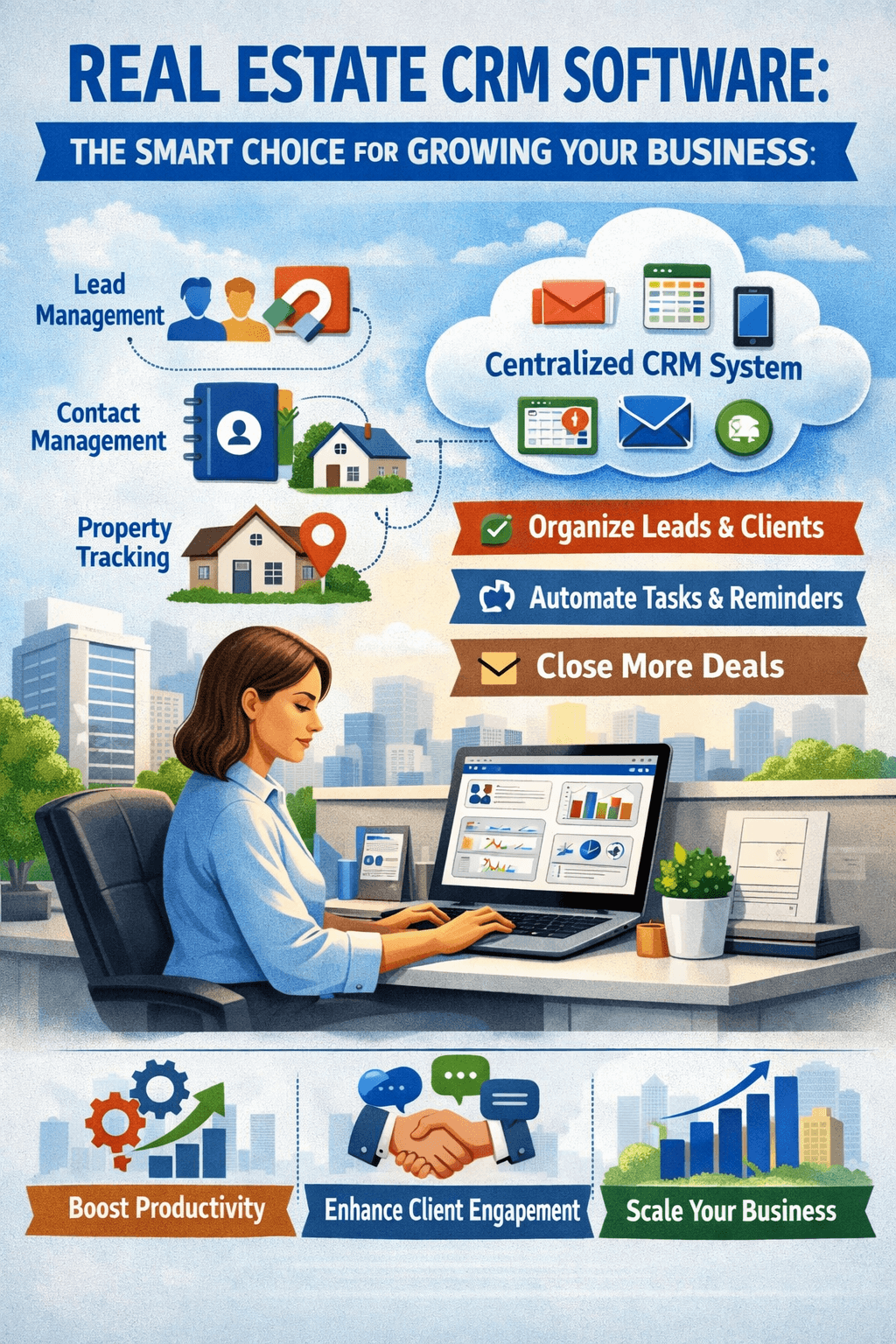
In the competitive world of real estate, staying organized and maintaining strong client relationships are crucial for success. This is where buying real estate CRM software becomes a game-changer. A CRM system for real estate professionals is designed to streamline everyday tasks, improve communication, and automate processes that help you close more deals. With features like real estate lead management tools, contact management in real estate CRM, and real estate business automation, a CRM allows you to keep track of leads, clients, and properties all in one place.
Instead of juggling multiple spreadsheets or relying on memory, you can rely on a smart, cloud-based solution to keep your operations running smoothly. By investing in real estate CRM software, you gain access to a centralized system that enhances client engagement, boosts productivity, and helps you scale your business efficiently. It’s the smart choice for any real estate agent looking to grow and succeed.
Why Should You Buy Real Estate CRM Software for Your Business?
A CRM system for real estate professionals offers an efficient solution to handle a variety of tasks within your business. Real estate professionals have multiple responsibilities: managing leads, tracking property inquiries, maintaining communication with clients, and organizing listings. Without a CRM, these tasks can quickly become overwhelming, leading to missed opportunities and errors. By choosing to buy real estate CRM software, you streamline all these processes, creating a seamless workflow that allows you to focus on what matters most—closing deals.
With real estate management software features like lead tracking, automated emails, and task reminders, CRM helps businesses stay organized. It also improves team collaboration by centralizing information, enabling multiple team members to work on the same platform, update client data, and follow up on tasks efficiently. This means better management of real estate client communication tools and faster, more effective responses to potential buyers or sellers.
What to Look for When You Buy Real Estate CRM Software
When you decide to buy real estate CRM software, it’s important to choose a solution that fits your business needs. Start by looking at the real estate CRM tools for team collaboration. A CRM must allow seamless communication among your team members, ensuring that everyone is on the same page. You’ll also need to assess contact management in real estate CRM capabilities. A good CRM should help you easily store and access client information, making it easier to engage with prospects and clients.
Another feature to look for is real estate pipeline management systems, which help track every stage of the sales process. Whether it’s managing property listings or following up on lead inquiries, CRM should streamline your workflow. Furthermore, if your business uses multiple marketing channels, ensure that the CRM integrates well with real estate CRM with email marketing tools. These integrations can automate your email campaigns, saving you time and effort while boosting client engagement.
Key Features of the Best Real Estate CRM Software
The key benefits of real estate CRM software can be seen in its ability to automate and centralize essential operations. One of the most valuable features is real estate lead management tools. These tools help you capture, nurture, and convert leads into clients by tracking every interaction and automating follow-ups. With CRM for real estate agents, you can also segment leads based on their status, interests, and potential, enabling more targeted and effective marketing strategies.
Another feature to consider is real estate task management software. This allows agents to keep track of their daily tasks, deadlines, and appointments. With real estate business automation, your team can automate tasks like appointment scheduling, follow-up emails, and contract reminders. As a result, your team can spend more time focusing on building relationships and less time on administrative tasks.
How to Buy Real Estate CRM Software That Fits Your Needs
Choosing the right CRM system for real estate professionals can be a daunting task, given the number of options available in the market. To find a CRM that fits your needs, first assess your business size and structure. If you’re a small agency, an affordable cloud-based CRM for real estate might be ideal. On the other hand, larger firms may require a more robust system with advanced features for property management CRM.
Also, make sure the CRM integrates well with other tools you’re already using, such as your website, email system, and MLS. This ensures a smooth workflow without switching between platforms. Pay close attention to the software’s user interface. A real estate CRM system should be easy to navigate and require minimal training for your team to get started.
Benefits of Buying Real Estate CRM Software for Your Real Estate Team
One of the major benefits of CRM systems in property sales is increased collaboration. Real estate CRM software helps agents stay aligned by providing real-time updates on client interactions and tasks. This ensures that no lead falls through the cracks and allows your team to work more efficiently. When team members are on the same page, they can move deals forward more quickly and effectively.
Additionally, CRM helps reduce human error by automating routine tasks. This reduces the chance of miscommunication and missed follow-ups, ultimately enhancing customer satisfaction. With real estate client communication tools, your team can personalize interactions, track preferences, and respond promptly, leading to better customer relationships.
How Real Estate CRM Software Helps Manage Leads and Inquiries
Managing real estate leads and inquiries is a crucial aspect of any real estate business. CRM for real estate sales teams offers an organized platform to track every lead from the moment they first reach out to the final sale. Through real estate lead management tools, you can easily categorize leads, assign them to specific team members, and ensure that no inquiries are missed.
For example, if a client is interested in a particular property, the CRM can log their inquiry and alert the agent to follow up at the right time. Additionally, real estate CRM software can automate responses to initial inquiries, ensuring that leads are promptly acknowledged while giving agents time to personalize further communication.
The Role of Automation in Real Estate CRM Software
Automating real estate customer interactions with CRM is one of the biggest advantages of using real estate CRM software. By automating repetitive tasks like email follow-ups, appointment scheduling, and reminders, you can ensure that your team focuses on high-value activities. This not only saves time but also reduces the risk of human error.
With CRM software, you can set up automated workflows that trigger based on specific actions. For instance, if a lead shows interest in a property, the system can automatically send them relevant property information and schedule a call with an agent. This allows your business to run efficiently while providing a seamless experience for clients.
Integrating Your Real Estate CRM Software with Other Tools
When you buy real estate CRM software, make sure it integrates smoothly with other essential tools. For instance, if your business uses a website to list properties, your CRM should be able to sync with your site to automatically update property listings and track online inquiries. Integrating with real estate CRM with email marketing tools allows you to nurture leads with targeted campaigns, while integration with social media platforms enables you to track and respond to social media inquiries.
A comprehensive real estate management software should also integrate with financial tools, helping you track commissions, expenses, and payments. By connecting all these tools, you create a seamless workflow that helps your business operate more efficiently.
The Importance of Mobile Access When You Buy Real Estate CRM Software
In today’s fast-paced real estate world, agents are often on the go. This makes having mobile access to your real estate CRM an essential feature. Cloud-based CRM for real estate enables agents to access client information, property details, and communication tools from anywhere. Whether in the office, on-site, or at a showing, agents can quickly update records, respond to clients, and stay on top of tasks in real-time.
With mobile access, agents can ensure that no matter where they are, they are always in touch with their leads and clients. This flexibility improves efficiency and responsiveness, ultimately leading to better customer service and more closed deals.
Why Buy Real Estate CRM Software with Email Marketing Features
Email marketing is one of the most effective ways to stay connected with clients. By purchasing real estate CRM software with email marketing features, you can easily automate and personalize your communication. This includes sending property updates, newsletters, and promotional offers directly to your clients’ inboxes.
An integrated real estate CRM system with email marketing ensures that messages are sent at the right time to the right audience, increasing engagement. With features like segmentation and analytics, you can refine your email campaigns to target the right leads and improve conversion rates.
How Buying Real Estate CRM Software Improves Client Communication
Effective communication is at the heart of building strong client relationships in real estate. With real estate CRM software, you can manage all client communication in one place, ensuring nothing is overlooked. Real estate client communication tools such as email tracking, chat integration, and call logs allow your team to provide consistent and timely responses to clients.
By having access to a comprehensive history of each client’s inquiries and preferences, agents can personalize their conversations and tailor their services. This creates a more seamless experience for clients and strengthens their trust in your business.
How to Ensure Data Security When You Buy Real Estate CRM Software
Data security is a top priority when purchasing real estate CRM software. With sensitive client data and transaction details at stake, it’s essential to choose a CRM with strong encryption and backup features. Ensure that your CRM provider complies with relevant data protection regulations, such as GDPR or CCPA, to protect your clients’ privacy.
In addition to data encryption, make sure your CRM has secure login options like two-factor authentication (2FA). This will safeguard access to your system and prevent unauthorized users from accessing sensitive data. Ensuring the security of your data helps build trust with clients and protects your business.
Best Pricing Options and Plans When You Buy Real Estate CRM Software
When choosing a real estate CRM software, understanding the pricing options is crucial. Most CRM providers offer tiered pricing plans based on features and the number of users. It’s essential to assess the features included in each plan to determine which best meets your needs.
For small agencies or solo agents, affordable real estate CRM software options are available that offer basic functionalities. However, larger teams might need more advanced features, such as team collaboration tools, advanced analytics, and mobile access. Take time to compare plans and choose one that aligns with your business goals and budget.
Real-Life Success Stories: How Buying Real Estate CRM Software Transformed Businesses
Real-life case studies can provide valuable insight into how real estate CRM software can transform a business. For example, a small agency that implemented CRM software saw a 25% increase in sales within six months, thanks to better lead management and client communication. The CRM system automated follow-up emails, tracked leads, and helped agents stay organized, resulting in improved efficiency and client satisfaction.
Another real estate firm used CRM to enhance team collaboration. By integrating CRM with their email marketing system and task management software, the team was able to work more cohesively, ultimately leading to increased sales and stronger client relationships.
Conclusion: Why Buying Real Estate CRM Software is Essential for Your Business
Investing in real estate CRM software is a smart decision for any real estate business. Not only does it streamline operations, but it also enhances client communication, improves lead management, and boosts sales. By choosing the right CRM, you can automate time-consuming tasks, manage your leads more effectively, and provide better service to your clients. In the fast-paced world of real estate, buying real estate CRM software is no longer optional—it’s essential for growth and success.
FAQS
Why should I buy real estate CRM software?
Buying real estate CRM software helps streamline operations, manage leads efficiently, and improve client communication.What are the key features to look for when you buy real estate CRM software?
Look for features like lead management, task automation, client communication tools, and reporting capabilities when buying real estate CRM software.Is buying real estate CRM software worth the investment?
Yes, buying real estate CRM software increases productivity, automates tasks, and helps nurture client relationships, providing long-term value.How does buying real estate CRM software improve sales?
CRM software improves sales by organizing leads, automating follow-ups, and ensuring timely communication with clients, resulting in higher conversion rates.- Can I integrate other tools with real estate CRM software?
Yes, most real estate CRM software offers integration with email marketing, social media platforms, and MLS systems, enhancing your workflow.